
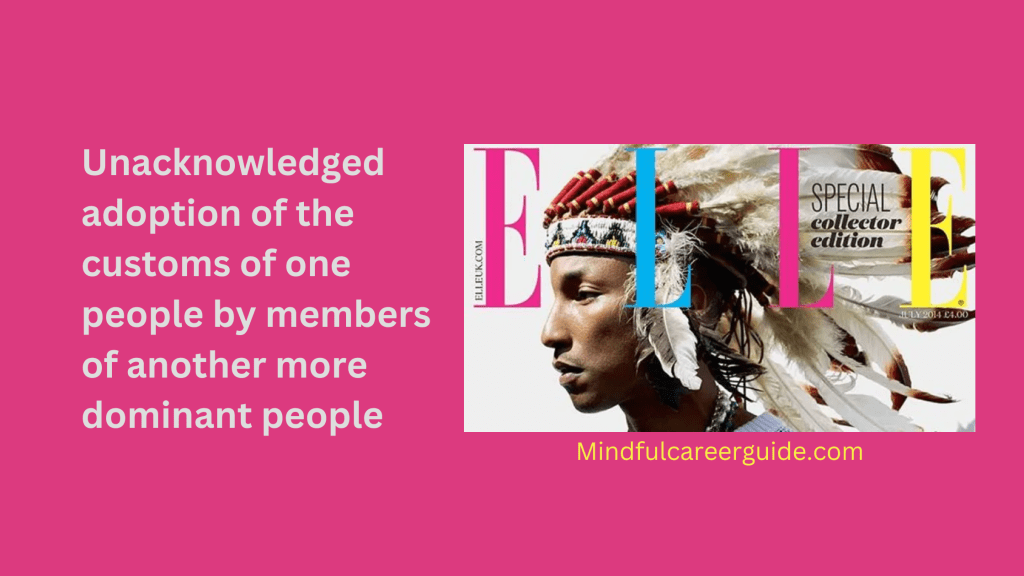
Cinco de Mayo is my least favorite holiday. I suspect that adult beverage companies promote it because it is easier to say than Dieciséis de Septiembre (the real Mexican Independence Day). As an indigenous person and community college instructor, I observed Cinco de Mayo by teaching students about cultural appropriation vs. cultural appreciation.
Why would a career counselor talk about cultural appropriation in a career planning class? This is important because professionals in entertainment, fashion and sports industries continue to make offensive choices. When my students become business leaders, I want them to make informed decisions about how they acknowledge cultures outside of the dominant White culture. Moreover, learning how to respect the multiple identities of everyone in the workplace is an essential skill and, therefore, career development.
Cultural appropriation is the unacknowledged or inappropriate adoption of the customs, practices, ideas, etc. of one people or society by members of another and typically more dominant people or society.
Examples of cultural appropriation:
- Athletic brands decorating leggings with tribal tattoos
- Sports teams using Native American images as mascots
- Designers using medicine wheels as fashion adornments
- Wearing mustaches, sombreros and ponchos on Cinco de Mayo
- Wearing an Indian headdress on the cover of a fashion magazine
Cultural appreciation is learning, listening, understanding, and honoring a culture without benefit to yourself.
Examples of cultural appreciation:
- Acknowledge other cultures’ holidays
- Attend lectures about the immigrant experience
- Pay a Mexican to teach you how to make Mexican food
- Look up information about the real Mexican Independence Day
- Learn about the Native American nations that lived on your land
Once again, I plan to observe Cinco de Mayo by staying away from businesses that cater to people who might choose to wear mustaches, sombreros and ponchos as costumes. No one wants to see me scowl at a ‘Cinco de Drinko’ sign. Instead I will acknowledge and appreciate that my normal health practices – Zumba (Columbia), yoga (India) and surfing (Hawaii) – did not originate in the dominant culture.
Have you ever had a conversation about cultural appropriation? How did it go?
 Mindful Career Guide